
A beach holiday in Phuket can end with an awkward question: where next? Bangkok is the obvious answer if you are staying in Thailand, but it is not the only way to leave the island. Phuket has international flights that can take you straight into another Southeast Asian city, without retracing your route through the Thai capital.
Three especially useful places to compare are Kuala Lumpur (KUL), Singapore (SIN) and Ho Chi Minh City (SGN). Each offers a different kind of next chapter. Kuala Lumpur is a practical base for seeing more of Malaysia. Singapore makes an easy short city stop and a major connecting hub. Ho Chi Minh City is the liveliest choice if you want to keep travelling through Vietnam.
The best flight is not necessarily the one with the lowest headline fare. A sensible onward route also fits your last night in Phuket, the baggage you are carrying and what you actually want to do when you land.
First, make sure you are leaving from HKT
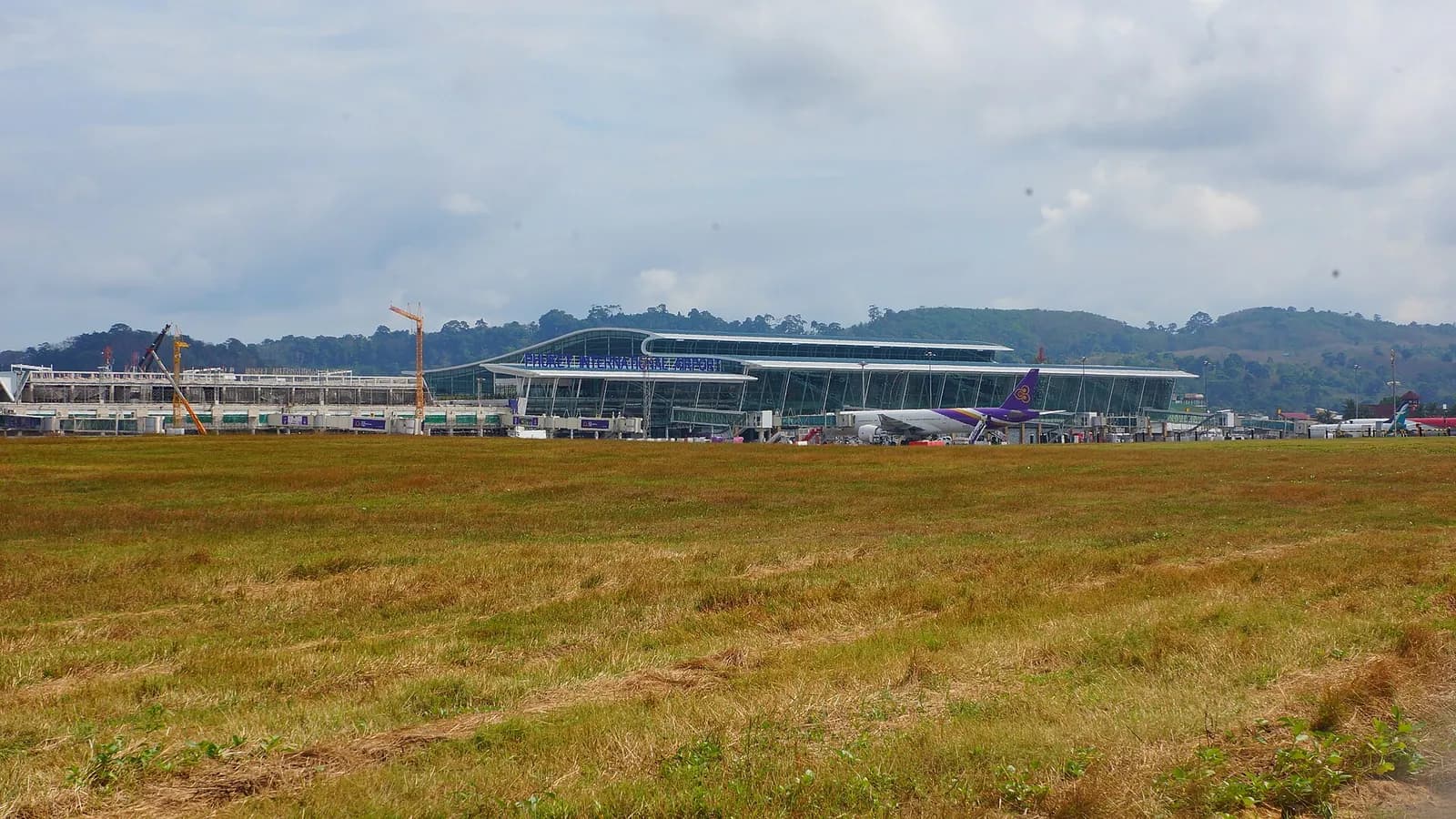
Phuket International Airport uses the code HKT. It sits in the north of the island, a long way from the hotels and beaches around Patong, Karon, Kata and Rawai. That distance matters more than it looks on a flight-search screen.
If your final night is in Patong, an early departure means arranging a road transfer while most of the resort is still asleep. From Kata or Rawai, allow even more time. Traffic on the main island roads can turn a modest-looking journey into a slow one, particularly when rain or holiday crowds are involved.
There is a budget alternative for travellers with flexible schedules: the Phuket Smart Bus connects the airport with the west-coast beach areas. It is useful for planning a relaxed arrival or departure, although a very early flight may call for a prearranged car instead. The airport's transport page is a better reference for the route than an old social-media timetable.
Also look carefully at the airport code when searching. A cheap domestic flight to Bangkok may look like the first leg of your onward journey, but it still leaves you in Thailand. If the point of the next booking is an international departure, the relevant sector is the one that crosses the border. The one-way travel guide explains the difference between a domestic connection and the flight that actually takes you to another country.
Kuala Lumpur: the easiest choice for a longer Malaysian stop
Kuala Lumpur is a good follow-up to Phuket when you want to swap the beach for food, neighbourhoods and a city that works as a base for more travelling. You can spend a couple of days around Bukit Bintang and Chinatown, then decide whether to continue north toward Penang or spend longer in Malaysia.
The Phuket–Kuala Lumpur route is short. Current published schedules show nonstop services operated by carriers including AirAsia, Malaysia Airlines and Batik Air, with flight times around an hour and a half. The HKT–KUL schedule is a useful starting point for comparing departure windows; choose your actual date before relying on a particular service.
The catch is that Kuala Lumpur International Airport is not in the city centre. It is an excellent airport for connections, but a hotel in the city adds another journey after landing. The airport train makes that fairly painless: the operator says KLIA Ekspres reaches KL Sentral from Terminal 1 in 28 minutes and Terminal 2 is another three minutes away.
Check which terminal your airline uses. The airport code is KUL for both, but Terminal 1 and Terminal 2 are separate buildings. A one-night stop with a late arrival and an early onward departure can feel like a lot of commuting; two or three nights give the city room to breathe.
Kuala Lumpur is the strongest option of the three if you want to keep your itinerary open. The city offers plenty to do without committing immediately to another international flight, and it has onward connections across the region.
Singapore: best for a compact city break and onward connections
Singapore is a different kind of stop. It is organised, easy to navigate without a car and rewarding even if you only have two nights. After a week around Phuket's beaches, a walk through Kampong Glam, a hawker-centre dinner and an evening by Marina Bay can feel like a complete change of scenery.
There are nonstop flights from Phuket to Singapore. Singapore Airlines confirms the direct route and lists a typical flight time of a little over two hours, depending on the service. Scoot is another airline to compare for this route. Do not compare the first fare you see with a full-service ticket until you have included any checked bag you plan to bring.
Flights arrive at Singapore Changi Airport (SIN), which is well connected to the city. The airport's official transport guide explains the MRT connection via Tanah Merah or Expo. That is particularly convenient when you are staying near a rail station and arriving during train operating hours.
Singapore's biggest trade-off is the total cost of the stop. Accommodation and meals can cost noticeably more than in Phuket or Kuala Lumpur, although hawker centres and public transport make a short visit manageable. If you are staying only one night, think about whether you want a city experience or simply a convenient connection.
For travellers continuing farther afield, Singapore is appealing because Changi offers a wide network of flights. A separate onward flight booked for another day is easier to enjoy than a tight same-day self-transfer with baggage and terminal changes.
Ho Chi Minh City: the most interesting start to a Vietnam journey
Ho Chi Minh City is the choice for travellers who are ready to trade island afternoons for motorbikes, coffee shops and the energy of a large Vietnamese city. It works especially well if Phuket is the end of your Thailand trip and Vietnam is the beginning of the next one.
You can fly from Phuket to Ho Chi Minh City without going back through Bangkok. VietJet's official Phuket–Ho Chi Minh City route page lists the connection, and published schedules show nonstop services taking roughly two hours. Timetables vary by travel date and season, so compare the actual departure you intend to use rather than memorising a flight number.
The arrival airport code is SGN, for Tan Son Nhat. It is much closer to the city than Kuala Lumpur's main airport is to central Kuala Lumpur, but the drive can still take time in heavy traffic. Choosing a first hotel in District 1 or another area you plan to explore makes the initial transfer easier to justify.
Ho Chi Minh City also offers a natural route forward. Stay a few nights, head to the Mekong Delta, or continue north through Vietnam. If you are planning a longer northbound trip, think about the places between Ho Chi Minh City and Hanoi instead of treating the flight as an isolated purchase. A slower journey through Vietnam can be more rewarding than another quick airport stop.
Of the three destinations, Ho Chi Minh City feels most like the beginning of another journey. It is less of a neat stopover and more of an invitation to keep moving.
Compare the whole trip, not just the flight
Here is how the three options differ in practice:
| Next stop | Flight from Phuket | Best fit | Detail worth noticing |
|---|---|---|---|
| Kuala Lumpur (KUL) | Nonstop, around 1½ hours | Exploring Malaysia and keeping options open | Airport-to-city transfer and terminal |
| Singapore (SIN) | Nonstop, a little over 2 hours | Short city break or major flight hub | Accommodation budget and arrival time |
| Ho Chi Minh City (SGN) | Nonstop, around 2 hours | Starting a Vietnam journey | Traffic after arrival and the next leg north |
A flight that lands at 11 p.m. can cost you an extra hotel night without giving you much time in the destination. A cheaper fare without baggage may become the expensive option once you add a suitcase. And a route that looks efficient on a map may involve a long road transfer before you even reach HKT.
Try comparing each choice as a door-to-door travel day: checkout time, transfer to Phuket Airport, flight, transfer from the arrival airport and the first evening at your next stop. That calculation often makes the right destination obvious.
What if you have not decided where to go yet?
Start with the kind of trip you want after Phuket. A short city stop points toward Singapore. Several more days in Malaysia make Kuala Lumpur attractive. A bigger Southeast Asia itinerary can begin in Ho Chi Minh City.
Then look at flights on the date you expect to leave Thailand. A useful itinerary shows the actual departure airport, international destination and travel date. If you are planning a one-way journey, the broader guide to choosing an onward destination explains how to fit that next flight into the rest of the trip.
There is no prize for squeezing the most countries into one holiday. The good route is the one that leaves enough time to enjoy the next place. Phuket already gives you plenty of reasons to stay an extra day; the next flight should give you an equally good reason to go.