
Return date or onward date: which one is yours?
Forms put the two words together because either one answers the same question: when are you leaving? A return journey takes you back to where you came from, usually home. An onward journey takes you somewhere new, such as Bangkok to Kuala Lumpur after two weeks in Thailand.
If you are flying home at the end of the trip, your return flight is your exit, so its date goes in the box. If you are continuing to a third country, the onward flight is your exit. The field does not care which one it is, only that it shows the day you leave.
Where you will see this question
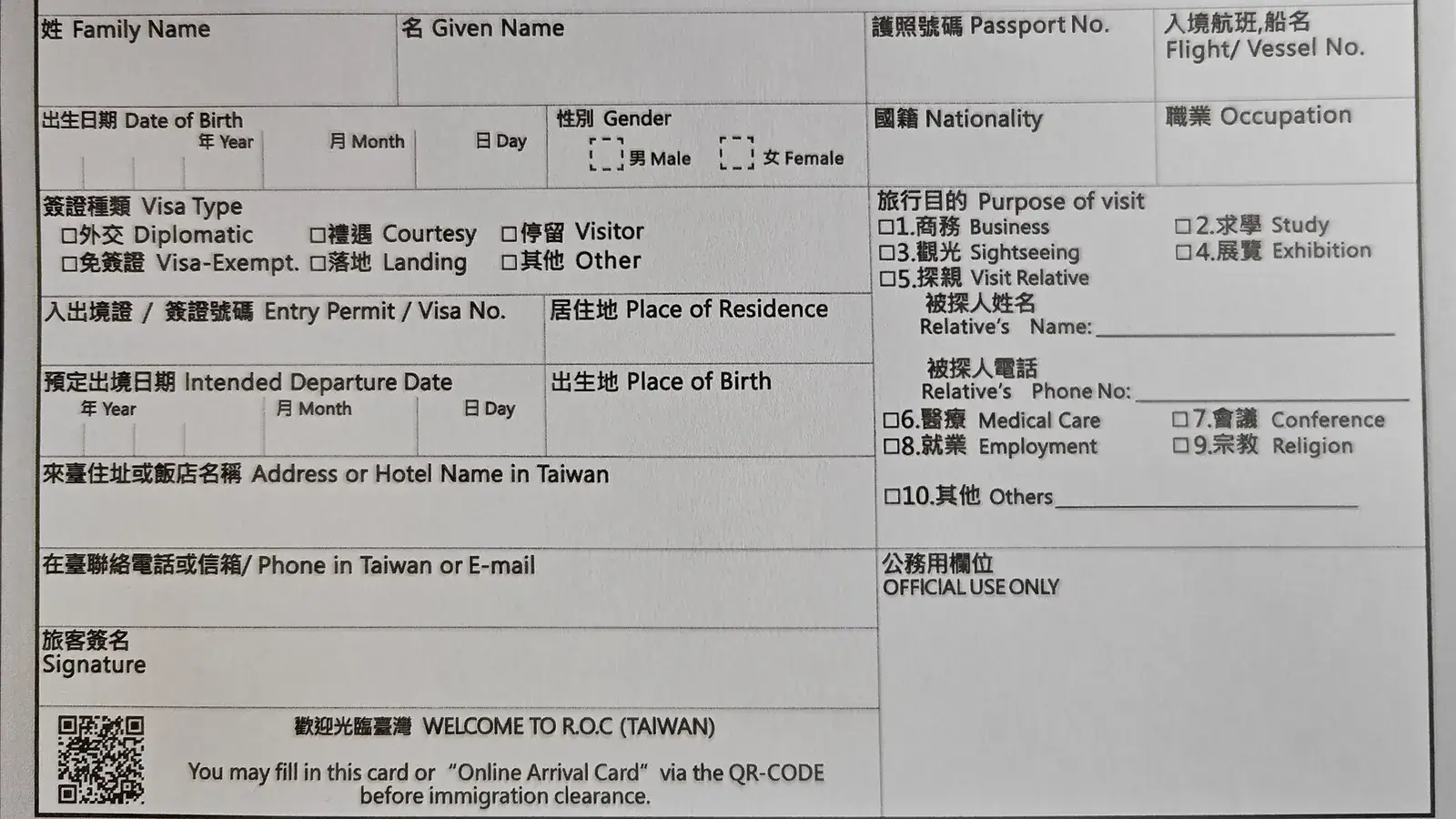
Different documents use different wording for the same thing. Taiwan's paper arrival card, for example, asks for an "Intended Departure Date". Other forms say "date of departure", "return date", "return/onward date" or "onward/return journey details". Visa applications often ask for your planned departure together with your arrival date, so the officer can see the length of the stay.
The Schengen visa application asks the same thing in its own words: your intended date of departure from the Schengen area after your first stay. Enter the day you leave the last Schengen country, not an internal hop such as Rome to Paris. If you fly Paris to New York on 28 June, the date is 28 June, and it should match your flight reservation, hotels and travel insurance.
Airlines ask too. At check-in, especially on one-way tickets to countries with entry rules, staff may ask "Do you have a return or onward ticket?" and look for a booking that matches. The difference between an onward ticket and a return ticket explains what each one covers.
Which date to write when the flight leaves late at night
Use the local departure date printed on your booking for the flight leaving the country. A flight at 00:40 on 15 March leaves on 15 March, even if you head to the airport on the evening of the 14th. Arrival times and time-zone changes at the other end do not matter here. Our guide to onward flights after midnight walks through the common mix-ups.
The date has to fit inside your permitted stay
The return/onward date is not just a formality. It has to fall within the stay you are allowed. If your visa or visa-free entry gives you 30 days, a departure on day 35 tells the officer you plan to overstay.
Check how many days your passport and entry type allow before you choose the date. The onward ticket requirements by country show which destinations ask for proof of departure and link to each country's official sources.
What if you haven't booked your exit yet?
Many travelers fill in this field before their plans are final. Enter the date you realistically expect to leave and keep it within your permitted stay. What matters next is whether anyone will ask you to prove it.
Some countries and airlines only want a date on the form. Others want to see a booking that shows you leaving. If you need something to show but are not ready to buy the final flight, you have three common options:
- Buy the actual flight you plan to take.
- Buy a refundable fare and cancel it if your plans change.
- Use a temporary flight reservation with a real booking reference, which shows a planned departure without paying the full fare. It stays active for 72 hours as standard, or 7 days when the flight is at least 10 days away, so create it close to the day you need to show it.
Which one fits depends on whether you will use that flight and how much money you want to tie up. Our comparison of a refundable flight and a temporary reservation goes through the trade-offs.
Keep the same date across your documents
If you are applying for a visa, the departure date on the form should match your flight reservation, hotel bookings and travel insurance. A visa form that says 20 June next to a flight booked for 28 June raises questions you do not need. When you prepare a flight reservation for a visa application, use the dates from your application.
The same applies at the airport. If the arrival card says you leave on 10 August, the onward booking you show at check-in should say 10 August too.
Common questions about the return/onward date
Is the onward date the same as my flight home?
Only if you are going straight home from that country. If you are continuing to another country first, the onward date is the day you leave for that next country.
What if I leave by land or sea?
Use the date you cross the border or the ferry departs. An international bus or ferry ticket can show that date, although some airlines prefer to see a flight at check-in.
Can I change the date after I arrive?
Usually yes. Plans change, and the date on an arrival card is your intention at the time. What you must not do is stay longer than your permitted stay, whatever date you wrote.
Does the date have to match a ticket I already bought?
Not always, but it helps. If an airline or officer asks for proof, a booking with the same date makes the conversation short.